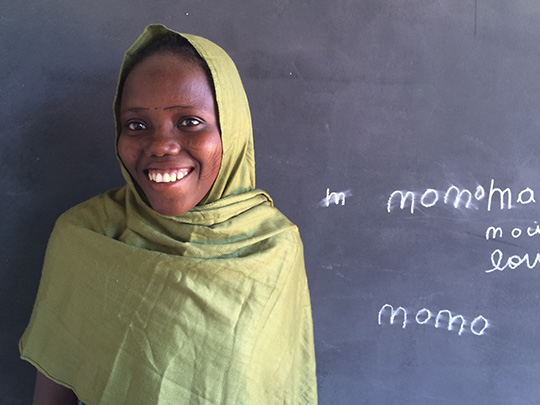
Tsahara’s Story: From Isolation to Healing and Independence
Tsahara was still a teenager living with her parents in Niger when her life took a sudden turn. She had been attending school, spending time with friends, and living much like other girls her age. At 16, however, her parents decided she should marry. She left school, and by 17, she was pregnant.
When labor began, Tsahara went to a clinic expecting to give birth. Instead, the labor continued for two days without progress. She was transferred to a second clinic, where another day passed. By the third day, her father had gathered enough money to pay for an ambulance to take her to a hospital.
There, Tsahara delivered by cesarean section.
Her baby was stillborn.
In the midst of that loss, Tsahara realized something else was wrong. Urine was leaking continuously through her vagina. She was told that the prolonged labor had caused an obstetric fistula.
The injury changed life at home almost immediately. Her husband rejected her because of the leaking, leaving Tsahara to return to her parents’ home while still grieving the death of her baby.
Before fistula, Tsahara had helped gather firewood and spent time with friends in her village. Afterward, she withdrew. She avoided work, stopped socializing, and rarely wanted to leave the house. The injury had not only changed her physical health. It had separated her from the ordinary routines and relationships that once filled her days.
Tsahara lived that way for three years.
Then she learned about Danja Fistula Center and heard words that gave her something she had been missing for years:
“At this hospital you can be cured.”
Tsahara’s fistula was complex. Repairing it would not happen with a single operation. She ultimately underwent three surgeries at Danja Fistula Center before the injury was successfully treated.
Healing also required more than surgery.
At Danja, Tsahara met other women who had lived through fistula and understood the isolation she had experienced. Their support helped her begin recovering emotionally as well as physically. Through the center’s reintegration program, she also learned practical skills, including knitting and how to use a sewing machine.
As her health returned, so did her plans for the future.
Tsahara eventually reunited with her husband and began thinking about how she could earn an income of her own. She hopes to sell the knitting and handiwork she learned through the reintegration program, save enough to purchase a sewing machine, and become a tailor.
Her story shows that fistula treatment is not always simple. Some injuries require multiple surgeries, time, patience, and specialized care. And even after the physical injury is repaired, women may still need community, confidence, and practical opportunities to rebuild the parts of life that fistula disrupted.
For Tsahara, healing took three surgeries. But what came afterward gave her something just as important: the chance to imagine a future shaped by her own skills, work, and ambitions.
Help Women Heal, Even When Treatment Is Complex
Tsahara’s fistula could not be repaired in a single surgery. Her recovery required specialized care, persistence, and support that continued after treatment.
Your support helps locally led partners provide complex fistula repair, survivor community, and reintegration programs that give women the tools to rebuild their lives.